






English translation of the Japanese article.
Key points
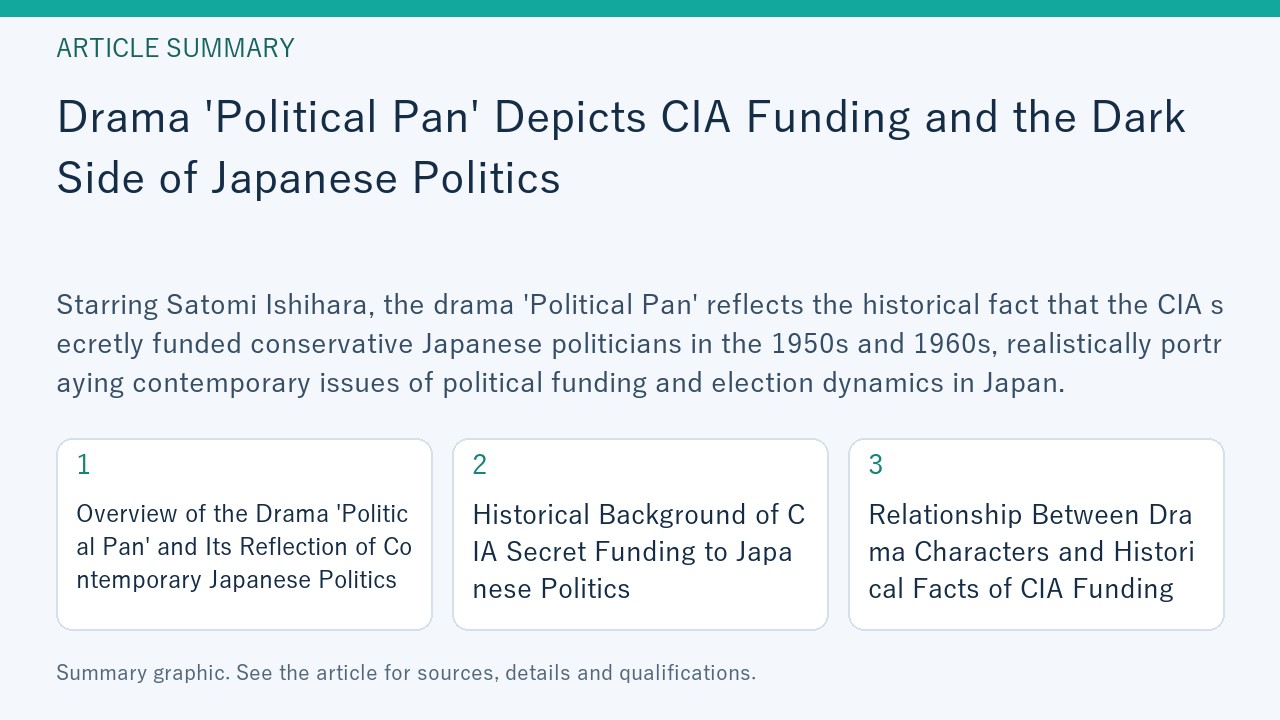
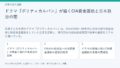
While set in the fictional nation of "Nipponia," the drama 'Political Pan' weaves in contemporary Japanese political funding issues, election backstories, and the historical reality of CIA secret funding. Notably, the CIA's financial support to Japan's conservative politicians (Liberal Democratic Party) during the 1950s and 1960s was first revealed by a 1994 New York Times report and corroborated by U.S. State Department diplomatic archives. These facts are reflected in the drama's character settings, drawing attention to the real dark side of politics. [1] [2] [5]
Overview of the Drama 'Political Pan' and Its Reflection of Contemporary Japanese Politics
The drama 'Political Pan' is set in the fictional country "Nipponia," centering on a "great thief" who enters the political world and a second-generation politician. It depicts real aspects of modern Japanese politics, including issues of "politics and money," election backstories, online manipulation, and slander, allowing viewers to sense the dark side of contemporary Japanese politics. The drama has been airing on Fuji TV since October 7, 2026. It realistically portrays online slander during election periods and the opacity of political funding, highlighting the complex realities of politics. [1] [6]
Within the drama, harsh political realities are depicted, such as the daughter of the ruling party "Kokujito" vice president winning an election as an independent and then joining the party. Issues like politicians' salaries and party subsidies are also addressed, realistically portraying the opacity of political funding and the reality of money-driven politics. These depictions encourage viewers to consider the behind-the-scenes aspects of politics. The drama goes beyond mere criticism of the ruling party, portraying the gray areas of politics from multiple perspectives. [5]
Historical Background of CIA Secret Funding to Japanese Politics
The CIA's secret funding to Japan's conservative politicians, particularly the Liberal Democratic Party, during the 1950s and 1960s was first revealed by a 1994 New York Times report. During the Cold War, the CIA provided funds to support conservative parties to make Japan a bulwark against communism and suppress the rise of left-wing forces. This funding is corroborated by U.S. State Department diplomatic archives (FRUS) and is believed to have continued from before the 1958 House of Representatives election into the early 1960s. [2] [5]
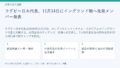
Yohei Kono, then LDP president and also deputy prime minister and foreign minister, denied the funding allegations in 1994 and requested the U.S. government to withhold the documents. However, in 2006, official diplomatic archives released by the U.S. State Department confirmed that CIA funding had indeed taken place. This revealed that the Japanese government and the LDP had concealed this fact for many years. This historical background provides important clues for understanding the dark side of contemporary politics. [3]
Relationship Between Drama Characters and Historical Facts of CIA Funding
The character Ichiro Kobayakawa's CIA funding suspicion in 'Political Pan' is believed to be modeled on former Prime Minister Nobusuke Kishi. Kishi was one of the conservative politicians who received secret CIA funding in the 1950s and 1960s, and this historical fact is reflected in the drama's setting. Kobayakawa is portrayed as the hawkish leader of the Kokujito party, with allegations of CIA funding for his leadership election being a key plot element. The drama blends historical facts with contemporary political situations to create realism. [4]
Additionally, the drama features other characters reminiscent of real politicians and fixers, depicting the complex human relationships and power structures in Japanese politics from the postwar period to the present. This allows viewers to gain a deeper understanding of the political backstage and historical darkness. The drama's script is based on thorough research and interviews, earning high praise as a work addressing social themes. [1] [5]
Sources and references
- [1] え、CIAの秘密資金まで?石原さとみ主演『ポリティカルパン』が描く“日本政治の闇” — diamond.jp
- [2] CIA Reportedly Paid Millions to Japan's LDP — www.latimes.com
- [3] 米公文書が裏付けた「CIAが自民党に秘密資金援助」の事実。アメリカ側に“隠蔽”を懇願していた大物政治家の実名 – まぐまぐニュース! — www.mag2.com
- [4] 【ポリティカルパン】CIA資金疑惑の小早川一郎のモデルは誰?片桐、政治家4人を調査 — ks-spice.net
- [5] え、CIAの秘密資金まで?石原さとみ主演『ポリティカルパン』が描く“日本政治の闇” — diamond.jp
- [6] え、CIAの秘密資金まで?石原さとみ主演『ポリティカルパン』が描く“日本政治の闇” — diamond.jp
This English edition was translated and reviewed using AI against the Japanese original and cited sources. Source titles remain in their original language.
コメント